这是一张首页图片

Introduction

Since its start in 1978, the International Conference on the Processing of East Asian Languages (ICPEAL) has been held every two years and has become an important international forum for research on how East Asian languages are learned and processed in the mind and brain. The conference brings together researchers from around the world to discuss key topics in the cognition, learning, and processing of East Asian languages.

ICPEAL provides a friendly platform for researchers to share new findings, exchange ideas and methods, encourage collaboration across disciplines, and help guide the development of East Asian language research. Over the years, the conference has presented work ranging from brain studies on language processing to experiments on language learning, supporting both theoretical understanding and practical applications.

The 19th ICPEAL will be held on 12–14 December 2025 at Guangzhou, China. The program includes keynote lectures by internationally recognized scholars, invited talks by experts, oral presentations covering ongoing research, flash (lightning) talks for brief presentations of new ideas, and poster sessions offering an open space to share research and meet other participants. We warmly invite researchers, scholars, and students from around the world to join us in Guangzhou for ICPEAL 2025 to learn about the latest work and developments in East Asian language research.

Advisory Committee

Prof. Jong-Tsun Huang

National Taiwan University

Prof. Hsuan-Chih Chen

Chinese University of Hong Kong

Prof. Lei Mo

South China Normal University

Prof. Yufang Yang

Chinese Academy of Sciences

Prof. Xiaolin Zhou

East China Normal University

Prof. Tai-Li Chou

National Taiwan University

Prof. Yiming Yang

Jiangsu Normal University

Prof. Yanping Dong

Zhejiang University

Organizing Committee

Prof. Suiping Wang (Chair)

South China Normal University

Prof. Xianyou He

South China Normal University

Prof. Ruiming Wang

South China Normal University

Prof. Leilei Mei

South China Normal University

Prof. Qing Cai

East China Normal University

Prof. Zude Zhu

Jiangsu Normal University

Prof. Zaizhu Han

Beijing Normal University

Prof. Xiaoqing Li

Chinese Academy of Sciences

Prof. Xiaohua Cao

Zhejiang Normal University

Secretary

Prof. Jian Huang

South China Normal University

Prof. Xuemei Chen

South China Normal University

Prof. Nan Li

South China Normal University
Topics

01

Character and word processing

02

Sentence and discourse processing

03

Concept / knowledge representation and storage

04

Speech perception, prosody and auditory processing

05

Language production

06

Language acquisition, development, and learning

07

Bilingualism

08

Language computational modeling

09

Language-related cognitive and emotional processing

10

Developmental and acquired language disorders

Keynote Speakers

Prof. Robert J. Hartsuiker

Ghent University
Professor of the Department of Experimental Psychology, Ghent University. Prof. Hartsuiker's lab focuses on language production, bilingualism, and the self-monitoring of speech. His research interests also include the cognitive aspects of the use of English as a medium of instruction in higher education. To address the research questions in these domains, his lab employs a wide range of methodologies including behavioral experiments, eye-tracking, EEG, fMRI, the study of language processing in individuals with brain damage, and computational models.

Prof. Ping Li

The Hong Kong Polytechnic University
Professor of the Department of Chinese and Bilingual Studies, Hong Kong Polytechnic University. Prof. Li's research aims at understanding the relationships among language, brain, and culture. In particular, his lab examines the dynamic interactions in the ecosystems of language learning and knowledge representation, and the corresponding dynamic changes in the native and non-native cross-linguistic brains. To achieve these goals, they rely on a variety of convergent behavioral, computational, and neuroimaging methodologies and technologies (e.g., cognitive testing, artificial neural network modeling, virtual reality, and functional magnetic resonance imaging).

Prof. Asli Özyürek

Max Planck Institute for Psycholinguistics
Professor of the Max Planck Institute for Psycholinguistics. Prof. Özyürek investigates cognitive and social foundations of human language capacity from a multimodal (in speech, gesture and sign) and cross-linguistic perspective. She is also dedicated bridging the gap between science, technology, society and education and making scientific practices inclusive and available for people with diverse backgrounds and languages as well as for immigrants, women and deaf individuals across the globe and in developing countries. To understand these research questions, she uses a variety of methodologies such as reaction times, eye tracking, machine learning, and neurolinguistic methods (EEG, MEG, fMRI).

Prof. Jesse Snedeker

Harvard University
Professor of the Department of Psychology, Harvard University. Prof. Snedeker's laboratory explores language development, comprehension, production, and representation in populations including typically developing children, adults, and a variety of special populations. Her laboratory employs a variety of methodologies, including eye-tracking, corpus analysis, and training studies. They use these methodologies to explore the process learning words and grammars, and probe the linguistic intuitions of naïve speakers.

Prof. Kate Watkins

University of Oxford
Professor of the Department of Experimental Psychology, University of Oxford. Prof. Watkins's research interests are in the area of cognitive neuroscience. Specifically, she interested in the brain processes underlying speech and language and brain development. This is studied by working with populations of children and adults with developmental disorders of speech and language (e.g. stuttering, developmental language disorder, and DLD). In her research, she uses a number of different methods in the laboratory including neuropsychological testing, brain imaging and brain stimulation.

Invited Speakers

Prof. Him Cheung

University of Canterbury

Prof. Gangyi Feng

The Chinese University of Hong Kong

Prof. Xingshan Li

Chinese Academy of Sciences

Prof. Chunming Lu

Beijing Normal University

Prof. Ding Nai

Zhejiang University

Prof. Xiuli Tong

The university of Hong Kong

Prof. Yiu-Kei Tsang

Hong Kong Baptist University

Prof. Shaonan Wang

The Hong Kong Polytechnic University

Prof. Andus Wing Kuen Wong

City University of Hong Kong

Prof. Ming Xiang

The University of Chicago

Prof. Yang Zhang

University of Minnesota

Submission

Rules of submission

Abstracts are limited to one paragraph, the maximum length of 300 words (not including the title, authors, and affiliations).

All abstracts will undergo peer review, most accepted abstracts will be presented as posters. However, a small number will be selected for oral presentation. Please indicate if you are willing to have your abstract considered for oral or poster presentation at the time of submission.

Please submit your abstract to gw_icpeal2025@m.scnu.edu.cn.

Submission Fee

There is no fee for submitting an abstract.

Confirmation of Acceptance

The ICPEAL 2025 Committee will review all abstracts in May. Notification of acceptance or non-acceptance will be emailed in June.

Sample of an abstract:

The Deadline for On-line Abstract Submission is on May 01, 2025

Give-name Family-name 1, Given-name Family-name 2

1 Department of Psychology, South China Normal University, Guangzhou, China

2 Department of Psychology, Chinese University of Hong Kong, Hong Kong, China

ICPEAL 2025 will be held in Guangzhou, the third largest city in China. Guangzhou is the starting point of the Sea Silk Road and now it is one of the most developed cities in China. You could wander among the historical sites of the ancient Southern Yue Dynasty dating back to 203 B.C., experience the beautiful night cruise trip on Pearl River, and enjoy the varieties of food both domestic and overseas. Cantonese food, one of the eight major culinary schools of food in China, is deeply rooted in Guangzhou's history and it is an inseparable part of its culture and people. Here you will encounter innovative modernity and ancient traditions of China, as well as welcoming Chinese hospitality. We think you will enjoy the social and cultural activities during the conference.

Corresponding author: Given-name Family-name

Email Address: gw_icpeal2025@m.scnu.edu.cn

Specify your preference for ORAL or POSTER presentation

Your browser doesn't support PDF embedding.Download the PDF.

Registration

The Deadline to Submit an Abstract for the ICPEAL 2025 Has Been Extended Through May 21.

The registration fee for the main conference
Registration Rates Early Bird Registration Paid by October 10, 2025 Regular Registration Paid by November 10, 2025 Late/On-Site RegistrationPaid after November 10, 2025
Faculty $250(¥1800) $340(¥2500) $480(¥3500)
Student $140(¥1000) $210(¥1500) $340(¥2500)
*The registration fee includes: conference materials and all the meals during the conference (Welcome banquet, coffee breaks, 3 lunches and 1 dinner)
Registration Timeline and Details
Abstract Submissions Open January 01, 2025
Abstract Submission Deadline May 21, 2025
Notification of Abstract Acceptance July 10, 2025
Deadline for advanced Registration October 10, 2025
Deadline for notification of cancellation with full refund November 10, 2025

Payment Information

Payment One: South China Normal University Campus Unified Payment Platform (Recommended for domestic participants; this method supports online payment with automatic electronic invoice, which is convenient and efficient.)

  1. Step 1: Submit Payment Information
    Please fully complete Attachment 1: ICPEAL Payment Information Collection Form and then email it to us: gw_icpeal2025@m.scnu.edu.cn . After submission, please wait patiently for our reply, which will include your payment platform username and initial password.

    Note: To avoid duplicate submissions for each abstract that have been accepted, one of the author may submit these information of all participants in a unified manner.
  2. Step 2: Log In to the Platform and Complete Payment
    1. Log in and change your initial password: Visit the South China Normal University Unified Payment Platform at http://hscwxf.scnu.edu.cn. Use the username and password that we provided to log in, then follow system prompts to change your initial password.

    Note: The Chinese / English can be switched in the top-right corner of the login page.

    2. Select Payment Item: After logging in, click [Other Pay], choose the payment item ("The 19th East Asian Language Processing International Conference" or “第19届东亚语言加工国际会议”) and amount. Once confirmed, click [Next].

    3. Review and Modify Invoice Information: Please click [Modify] to carefully review the information such as invoice type, invoice title, and Unified Social Credit Code, and make corrections as needed. Please verify all invoice details, as electronic invoices cannot be replaced after issuance.

    4. Choose Payment Method and Complete Payment:
    Select one of the following payment channels:
    - WeChat Pay
    - China Construction Bank
    - China Construction Bank Aggregated Payment (supports WeChat Pay and Alipay)
    After confirming the invoice details and payment amount, you can click [Confirm Payment]. The system will display a payment QR code. Before your final payment, please verify that the merchant name is "South China Normal University" or “华南师范大学”.

    Notes:
    a. If your payment fails, check your bank account. Do not re-pay if it has been debited.
    b. Except for the bank payment interface, this system does not require any bank account information. The bank payment system will never request password upgrades. Please do not disclose your personal banking information to the others.
  3. Step 3: Receive Your Invoice
    After successful payment, the Nuonuo Network system (诺诺网) will send an invoice notification email to your registered email address. You can download your invoice from your email.

Payment Two: Bank Transfer (For international participants or those unable to use online payment)

  1. Step 1: Complete Bank Transfer with Proper Remarks
    Please transfer the registration fee to the bank account of South China Normal University. In the transfer memo / remark field, please write your information in this format:
    "Participant Name + ICPEAL2025 + Registration Type (Faculty / Student)", e.g., "Xiao Ming + ICPEAL2025 + Student".

    Note:
    a. Each transfer must correspond to only one participant’s fee. To match the registration information for each participant, please do not transfer the registration fee for more than one participant once.
    b. Save a screenshot of the remittance receipt or bank receipt as proof for future verification.
  2. Step 2: Send Payment Confirmation Email and Obtain Financial Documentation
    After completing the transfer, please send us an email (gw_icpeal2025@m.scnu.edu.cn) to notify your payment. Again, to avoid duplicate submissions for each abstract that have been accepted, one of the author may submit these information of all participants in a unified manner.
    The email must include the following information:
    1. Full name of the attendee (must match the transfer memo);
    2. Email address for receiving financial documentation;
    3. Type of financial documentation required (select one):
    - English receipt (for international reimbursement or general use)
    - Chinese invoice (for domestic reimbursement). If selecting a Chinese invoice, please also provide: invoice type (individual / organization), invoice title, and Unified Social Credit Code;
    4. (Optional) Attach a screenshot or scanned copy of the remittance proof to expedite verification.

    After receiving your email and confirming your payment, we will send a corresponding financial document to your email address within 10 working days.
    If you do not receive the email within 10 business days, please feel free to contact us.

Program

MAIN CONFERENCE


SCHEDULE


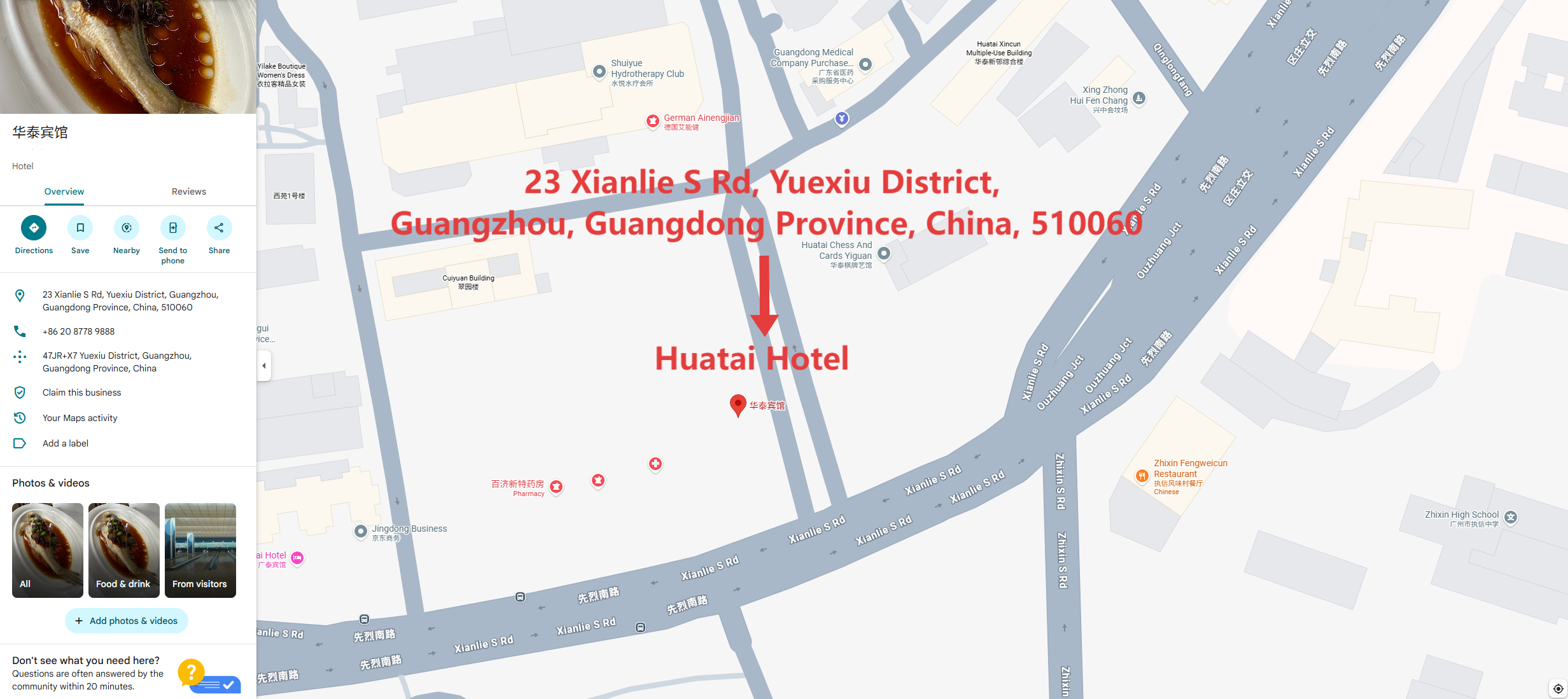
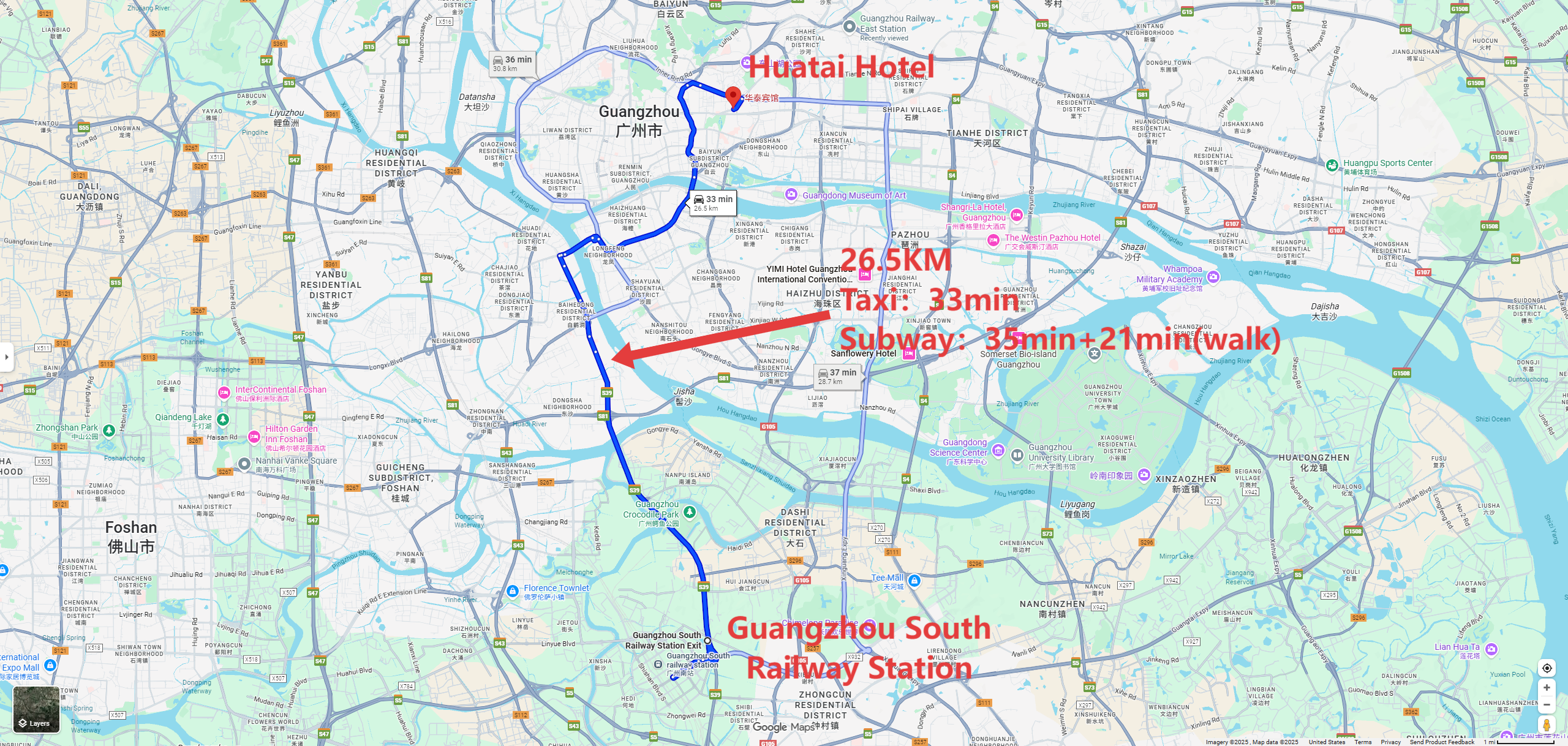
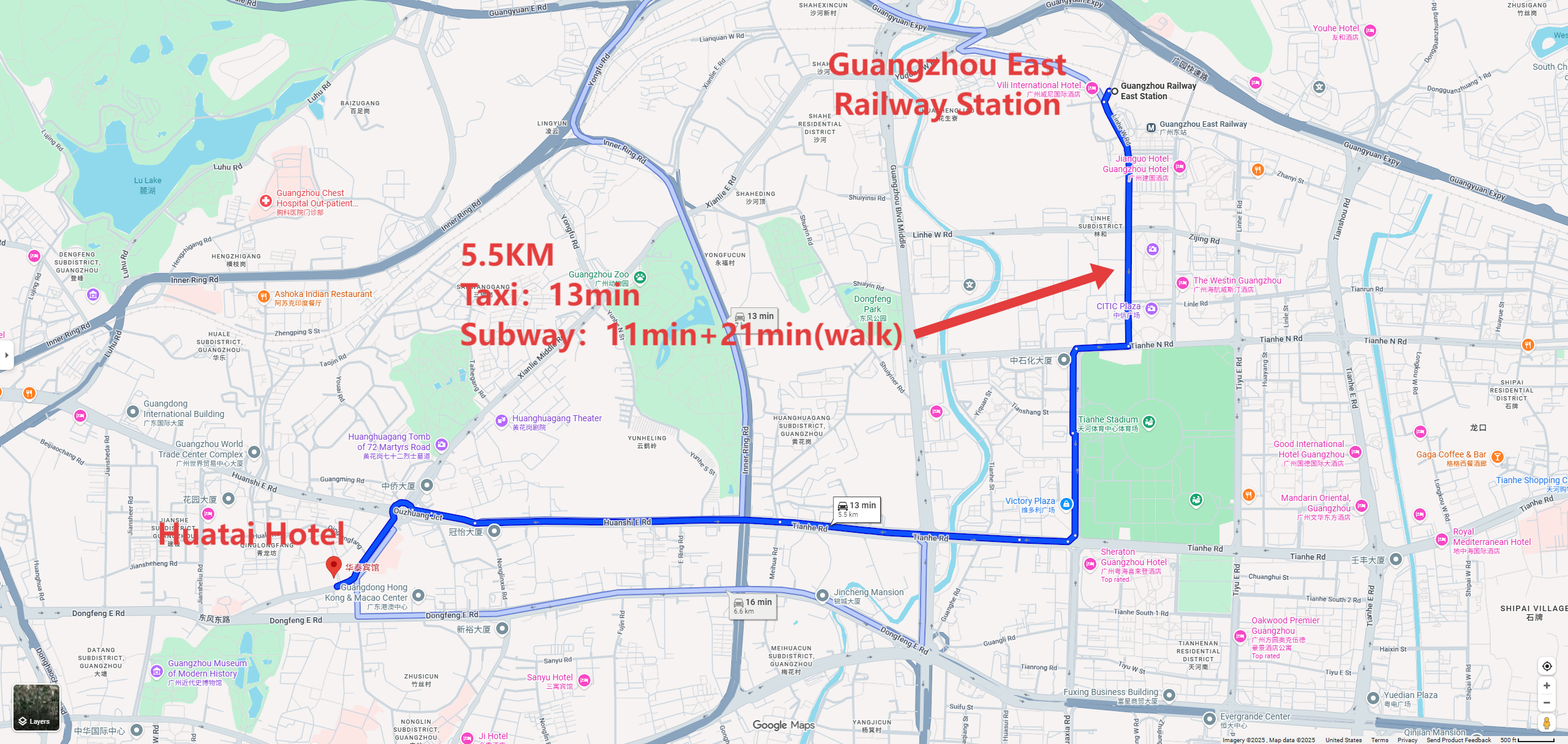
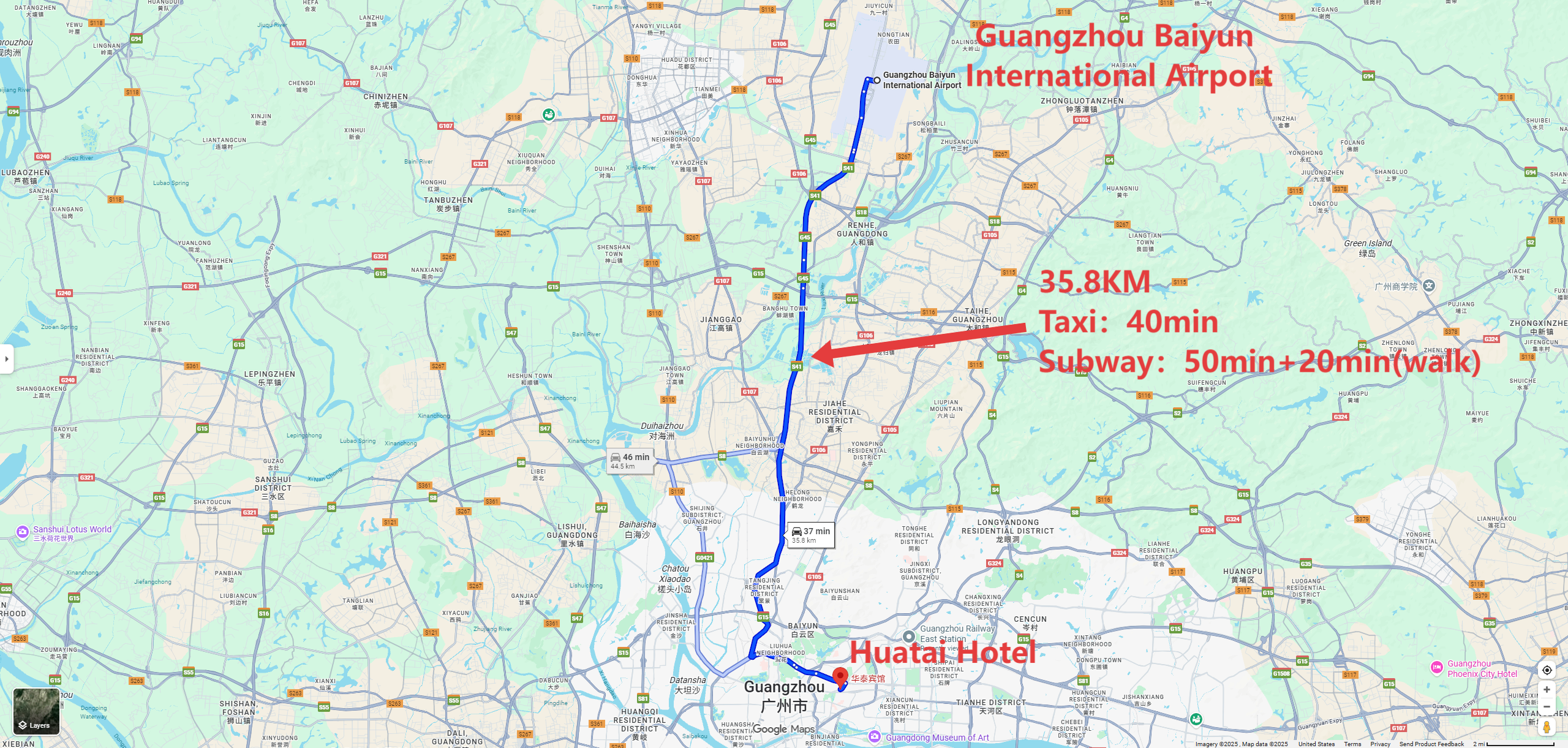
Meeting location: Huatai Hotel, Guangzhou (No. 23, Xianlie South Road, Guangzhou, China) December 12-14, 2025

PRE-CONFERENCE EVENTS


WORKSHOP


Hands-On Workshop: Building a Psycholinguistic Database with
Human Behavioral Big Data and Cross-Domain Representation Alignment

Organiser: Prof. Qing Cai East China Normal University
December 11, 2025

Accommodation and Tourist Attraction

Accommodation

Huatai Hotel

Address: No. 23, Xianlie South Road, Guangzhou, China


LN Garden Hotel

Address: 368 Huanshi Dong Road, Guangzhou, China


Website: Click Here

Ocean Hotel Guangzhou

Address: No. 412 Huanshi East Road, Yuexiu District, Guangzhou, Guangdong


Website: Click Here

All-season Hotel

Address: No. 376, Huanshi East Road, Yuexiu District, Guangzhou, Guangdong


Website: Click Here

Tourist Attraction